The Platform · Weaver
Every enterprise system knows part of reality. Weaver continuously resolves those fragments into one current Position for every employee, device, application, vendor, workplace, and AI entity.
Weaver reconciles it. Cortex exposes it. Convergence acts on it. Arbiter protects it when reality changes.
One platform · four capabilities
Part of the XOPS platform architecture
Why Weaver has to exist
Every system sees its own fragment. No system sees the whole. Each can be internally consistent while the enterprise is wrong collectively.
Workday
knows who someone is
Okta
knows their identity
Intune
knows their device
ServiceNow
knows the ticket
Coupa
knows the commitment
… and none of them fully agree.
Before XOPS can determine what should happen, something has to reconcile the evidence that decision depends on. The systems are not wrong. The decision simply spans several of them. That is Weaver.
Where it fits
Weaver resolves the entities, reconciles the evidence and maintains the Position. Everything above it runs on what Weaver keeps current.
Systems of record
Each holds a fragment
Weaver
Resolves & reconciles
Living Knowledge Graph
One Position per entity
Governed Outcome
Systems converge
XOPS writes approved changes back only to the systems that should change. It does not force every system to contain the same representation of state.
Where Weaver sits in the whole model
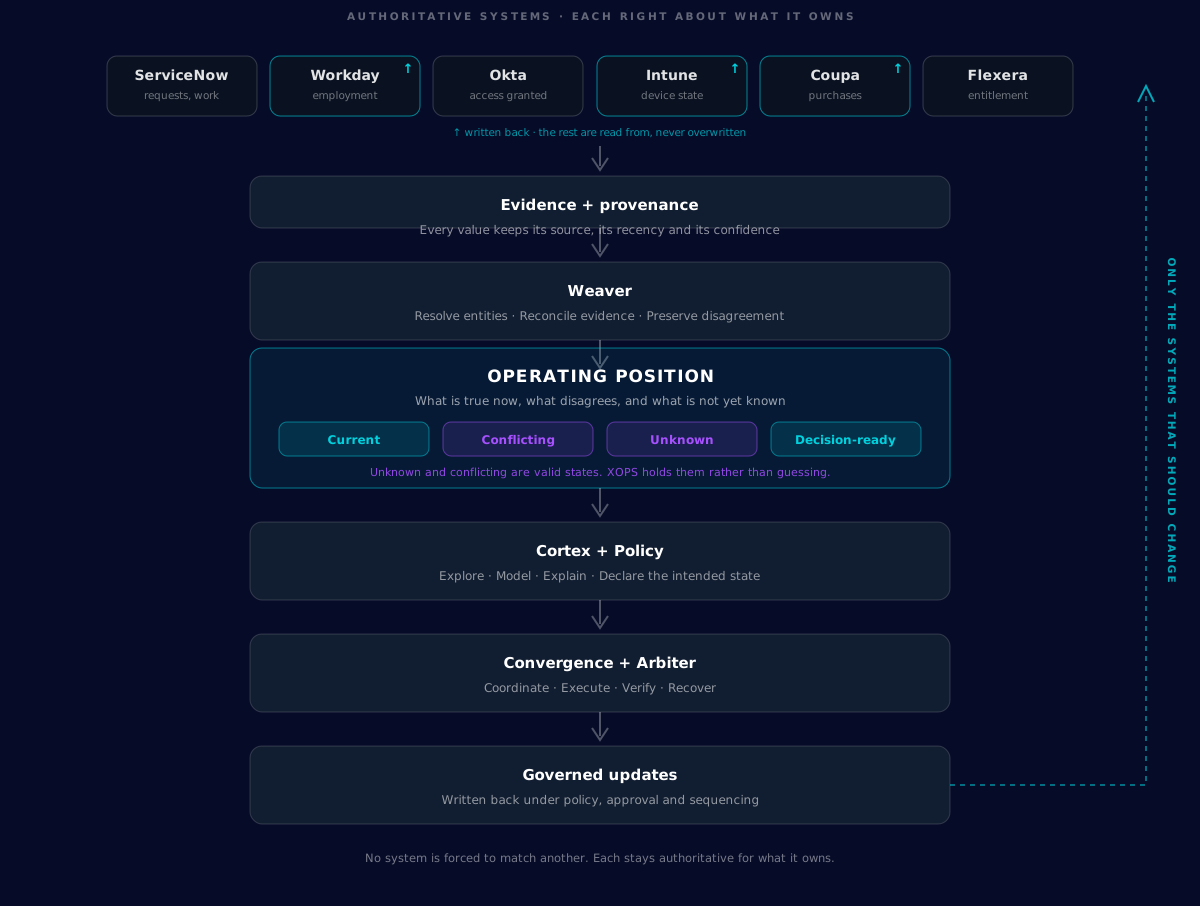
The foundation & the three capabilities that run on it
Weaver
Resolves entities & maintains the Position
Cortex
Exposes it, to humans and AI
Convergence Engine
Acts on it, deterministically
Arbiter
Coordinates competing change
Convergence decides what should execute.
Weaver is the governed connectivity boundary through which XOPS observes and changes the systems of record.
How it works
The intelligence is in the middle. Anything can connect to systems and copy data. Resolving the same real-world entity across systems that disagree, and reconciling the conflict into one current Position, is the hard part. It is what Weaver does.
Step 1
Weaver holds every integration — read-only first — to the systems that each know part of it. No proprietary agents on your endpoints.
Step 2
It continuously watches each source’s signals as they change — a live operating picture, not a nightly batch import.
Step 3
Entity resolution: Weaver matches the same real-world entity across systems that use different identifiers — and still line it up when they disagree.
Step 4
It turns conflicting evidence into one current Position, preserving every source, timestamp, and point of disagreement.
And then it never stops. Weaver maintains every Position continuously as reality changes, and writes back — with explicit sign-off — to the systems that should change, never to force them all into one state.
See it reconcile
This is what reconciliation actually looks like. The systems don’t agree. Weaver resolves them into one Position — and keeps the disagreement visible instead of silently picking a winner.
What the systems say
Weaver reconciles → Device Position
Every attribute → source · timestamp · provenance
Not integration middleware
Integration moves data. Weaver reconciles evidence into the Position. It connects to systems and reconciles entities, so it will remind an enterprise architect of tools they already run — but it does a different job, and that difference is what makes it the foundation of the XOPS platform.
Integration platform
Connects A to B and moves data between them.
Data warehouse
Gives you a historical, analytical view of what happened.
CMDB
Catalogs configuration state as records to look up.
Weaver
Continuously resolves the same operational entity across all of them, preserves provenance, identifies where they disagree, and maintains the current Position the platform uses to decide and execute.
Governed by design
Every reconciled attribute carries the system it came from and when. No value in a Position is unexplained.
Connectors come up read-only. Weaver reflects your operating reality before it is trusted to change anything.
Weaver reconciles conflicting evidence under policy without hiding the disagreement. Every value retains its source, timestamp, and provenance.
Changes to any system of record happen only with explicit sign-off, are fully audited, and are reversible.
Coverage
If a system isn’t connected yet, the Integration Factory adds it without changing the architecture. Weaver’s job is to make sure no authoritative source is left out of the Position.
Pick an employee, a device, or an application. Watch Weaver reconcile the evidence across your actual stack and establish the Position — conflicts and all.